
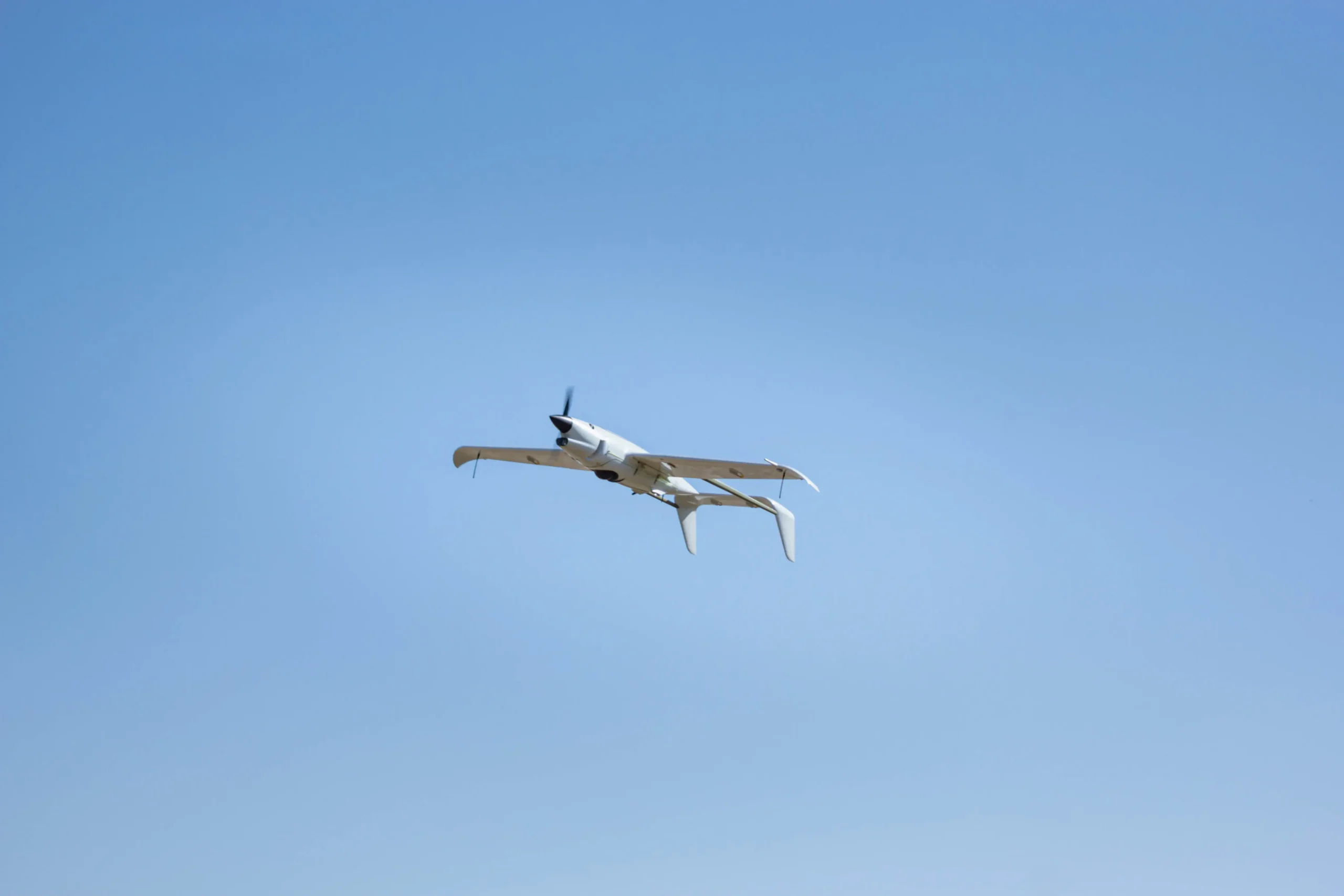
The trajectory from traditional aviation manufacturing to unmanned systems innovation rarely happens by accident. It requires engineering discipline, technical depth, and a philosophical commitment to reliability that transcends industry trends. Skyeton’s 18-year evolution from certified aircraft manufacturer to global UAV systems provider demonstrates how deep engineering heritage enables breakthrough unmanned capabilities.
Aviation Beginnings: K-10 Swift (2006)
Skyeton’s story begins not with UAVs, but with conventional aircraft design. In 2006, the company launched the K-10 Swift—a certified light aircraft designed to certified aviation engineering standards. This program, unremarkable in commercial aviation, established Skyeton’s foundation: team of engineers trained in aviation regulation, structural analysis, engine integration, and flight safety disciplines.
Certified aviation manufacture demands rigorous engineering: every design decision must account for safety margins, failure mode analysis, and regulatory compliance. These engineering practices don’t disappear when companies transition to UAVs—they become embedded in technical culture.

Certified Manufacturer Status (2007)
The following year, Skyeton earned official aviation manufacturing certification, a credential that differentiated the company from software startups entering aerospace. Manufacturing certification requires demonstrated competency in:
- Structural integrity verification
- Component sourcing and quality control
- Production consistency across units
- Test and validation protocols
- Documentation and traceability standards
This certification established that Skyeton wasn’t a company attempting to adapt software expertise to hardware; it was an aviation manufacturer with engineering discipline built into organizational DNA.
Transition to UAV Systems (2014)
In 2014, as unmanned systems gained regulatory acceptance and operational demand, Skyeton transitioned its aviation expertise toward long-range autonomous platforms. This wasn’t a pivot abandoning aviation knowledge—it was an application of established engineering discipline to unmanned systems.
The company began developing:
- Autonomous flight control systems
- Long-range telemetry architecture
- Ground control software
- In-house payload integration capabilities
Critically, these developments maintained aviation-grade engineering standards rather than adopting lower-cost, lower-reliability approaches common in emerging drone industries.
Raybird Deployment Era Begins (2018)
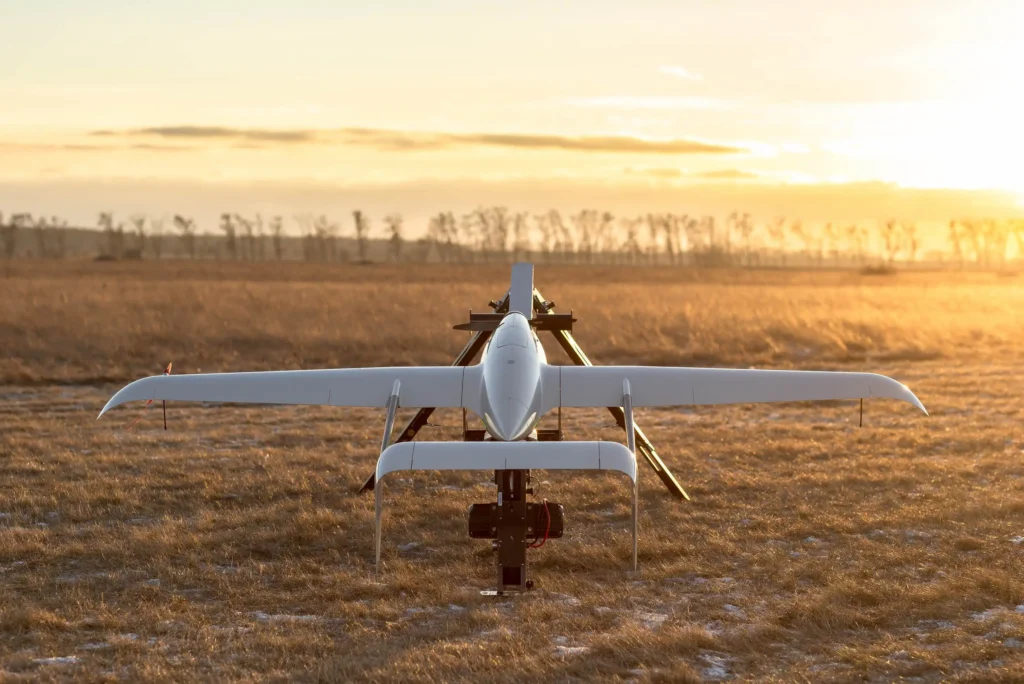
By 2018, Raybird entered operational deployment—not as a prototype, but as a mature platform refined through engineering cycles and validated through testing. The system integrated:
- 28+ hour endurance airframe (result of careful aerodynamic optimization and structural design)
- EFI engine systems (proven in K-10 aircraft, adapted for unmanned application)
- Integrated payload systems (thermal, optical, communications)
- Ground control software (developed in-house, not licensed from third parties)
The 2018 deployment marked Skyeton’s transition from manufacturer to operational systems provider. Teams began supporting real-world missions: wildfire detection, infrastructure monitoring, border surveillance.
Global Mission Expansion (2018-Present)
Following Raybird’s successful operational debut, Skyeton expanded global deployment:
- North American wildfire monitoring: Western states’ seasonal fire suppression campaigns
- European infrastructure inspection: Pipeline and transmission line monitoring across multi-national corridors
- Border monitoring: Perimeter surveillance in multiple geographic regions
- Search and rescue: Integration into emergency response capabilities
This global deployment provided real-world validation. Operational teams discovered nuances of thermal imaging in different climates, telemetry performance across varied terrain, maintenance requirements in different environmental conditions. Each deployment refined system design.
300,000+ Mission Hours: The Reliability Milestone
By 2024, Skyeton documented 300,000+ cumulative mission hours. This isn’t a theoretical specification—it’s evidence. Thousands of deployed systems, hundreds of operational organizations, execution of tens of thousands of individual missions across diverse environments.
This milestone demonstrates reliability that transcends marketing claims. A system achieving 300,000+ flight hours has proven itself through actual operational use, not laboratory testing.
1,000+ Systems Delivered: At-Scale Production
Alongside mission hours, Skyeton delivered 1,000+ Raybird systems to operational customers globally. This production volume required:
- Manufacturing scaling (maintaining quality across high production volumes)
- Supply chain development (sourcing consistent components globally)
- Technical support infrastructure (supporting deployed systems across multiple continents)
- Training programs (ensuring customer teams operate systems competently)
At-scale production of 1,000+ systems demonstrates that Skyeton achieved manufacturing maturity, not just prototype capability.
The 18-Year Technology Vision
Looking backward, Skyeton’s 18-year trajectory reveals consistent vision:
- 2006-2007: Establish manufacturing excellence through certified aircraft production
- 2007-2014: Maintain engineering discipline while aviation industry stabilized
- 2014-2018: Apply aviation expertise toward unmanned systems development
- 2018-present: Deploy proven systems globally, validating designs through real operational use
This isn’t the arc of a startup pivoting to trends. It’s the evolution of an aviation manufacturer deliberately building capabilities toward autonomous systems. The discipline established in 2006 remains embedded in 2024 design decisions.
The Future of Mission-Critical Autonomous Systems
Skyeton’s evolution from aviation manufacturer to unmanned systems provider suggests broader industry trajectory: as autonomous systems assume mission-critical roles, engineering discipline from aerospace heritage becomes increasingly valuable. Companies building systems for critical missions—wildfire detection, emergency rescue, infrastructure monitoring—will need the manufacturing discipline and engineering rigor that aviation heritage provides.
Skyeton’s 18 years demonstrate that this evolution is possible: taking aviation’s discipline and applying it to autonomous systems. The result: platforms trusted to execute critical missions, supported by teams committed to reliability above all.
Interested in learning more about Skyeton’s mission-driven approach to autonomous systems? Contact Skyeton to discuss how aviation heritage translates to your mission capability.